


Digital Ownership: How NFTs Evolved From an Experiment Into a New Era of Digital Assets
When Bitcoin first appeared in 2009, very few people knew what it would eventually become.
At the time, BTC did not have the vast trading market or mature institutional participation it has today. To many people, it was little more than a string of numbers circulating within a small community of technology enthusiasts.
Then, on May 22, 2010, an event took place that would later become one of the most frequently retold stories in cryptocurrency history.
Programmer Laszlo Hanyecz used 10,000 BTC to buy two pizzas. At the market price at the time, the BTC was worth about $41. The transaction is widely regarded as the first time Bitcoin was used to purchase a physical product in the real world.
People remember the story today not because of the pizzas themselves, but because of what the transaction demonstrated: a digital asset that almost no one understood at the time could be exchanged, priced, and assigned value in the real world.
Years later, NFTs would follow a surprisingly similar path.
If Bitcoin Addressed Digital Currency, Who Owns Digital Objects?
After decades of internet development, digital life has become familiar. Photos are digital. Music is digital. Game items are digital. Membership credentials are digital. Art can exist entirely in digital form.
But one question has remained:
If a digital image can be copied 10,000 times, who owns the original?
You can download an image, but the file itself does not necessarily prove that a particular digital asset belongs to you.
This is one of the ideas that helped give rise to NFTs.
Bitcoin demonstrated that a blockchain could record who owns a given amount of digital currency. NFTs extended that idea by attempting to record who owns a specific, unique digital object.
That is how digital ownership became another area of experimentation for blockchain technology.
NFTs Were Not Originally Called NFTs
NFTs did not appear all at once. In the early years after Bitcoin was created, people were already asking whether a blockchain that could record BTC could also be used to record other things.
Early developers explored concepts such as Colored Coins, which attempted to allow certain blockchain units to represent specific assets. Later, people began combining blockchain technology with art and collectibles.
In 2014, Kevin McCoy created Quantum, a work frequently cited as an important early milestone in NFT history.
At the time, the term “NFT” was not yet widely used in the way it is today. But an important idea had already emerged: a digital work did not have to be only a file that could be copied indefinitely. It could also have an identity and ownership record that could be verified on a blockchain.
This became an important foundation for the development of NFTs.
2017: When Digital Cats Helped Bring NFTs Into the Mainstream
One of the major turning points that helped bring the idea of NFTs to a broader audience came in 2017 with CryptoKitties.
The Ethereum-based blockchain game allowed players to buy, sell, collect, and breed different digital cats.
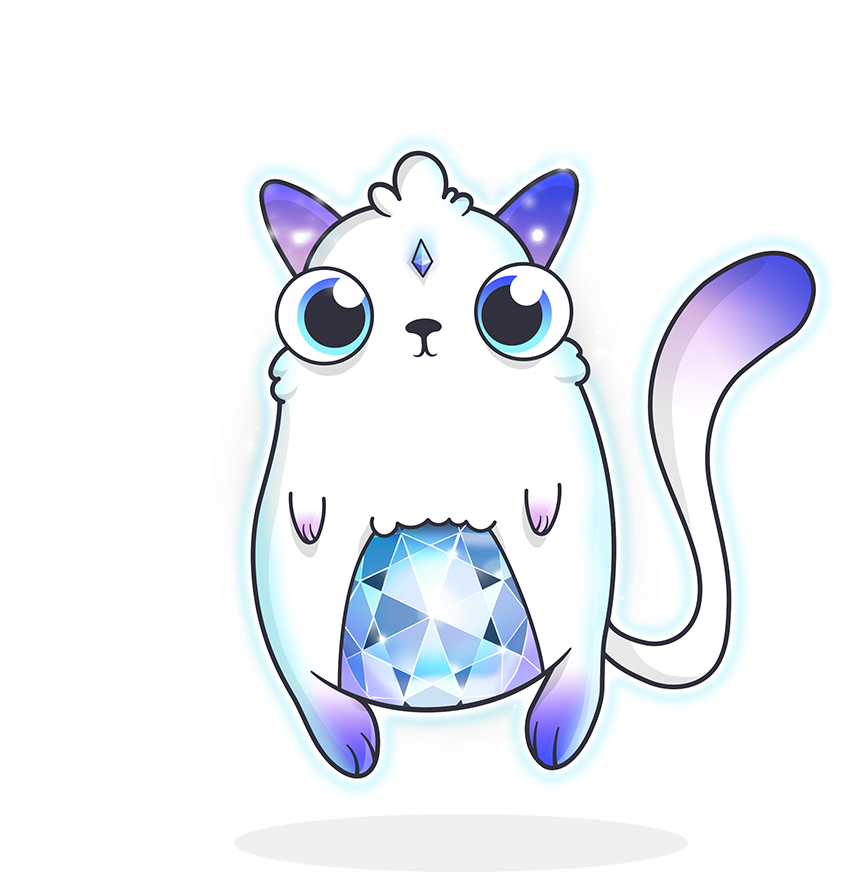
Genesis, CryptoKitty #1, one of the earliest CryptoKitties.
Buying a digital cat on a blockchain may seem ordinary today, but at the time it was a new idea.
In traditional games, equipment, characters, and other items are generally stored on servers controlled by the game company. CryptoKitties represented a different model: digital items could exist as blockchain assets and could be transferred and traded in an open market.
OpenSea has also cited the emergence of CryptoKitties in 2017 as an important milestone in its own development.
NFTs were beginning to move from a technical experiment into digital goods that ordinary users could see, collect, and trade.
Once NFTs Existed, They Needed a Market
As Bitcoin developed, cryptocurrency exchanges became important. NFTs faced a similar need.
As more people began to own CryptoKitties, CryptoPunks, and other blockchain-based assets, a practical question emerged:
- Where could people buy them?
- Where could they sell them?
- Where could they discover new NFTs?
Dedicated NFT marketplaces began to develop in response.
OpenSea was founded in 2017 and launched an open marketplace for Ethereum NFTs. Over time, NFT marketplaces began to provide infrastructure for displaying assets, discovering collections, making offers, buying, selling, and settling transactions on-chain.
This was an important step because an asset does not become a functioning market simply by existing. A market also needs:
The emergence of trading platforms helped turn NFTs that had previously been scattered across individual projects into a broader market.
2021: A Digital Artwork Sells for $69.3 Million
NFTs entered global public awareness in a much larger way in 2021.
That year, digital artist Beeple’s work EVERYDAYS: THE FIRST 5000 DAYS sold at Christie’s for:
$69,346,250
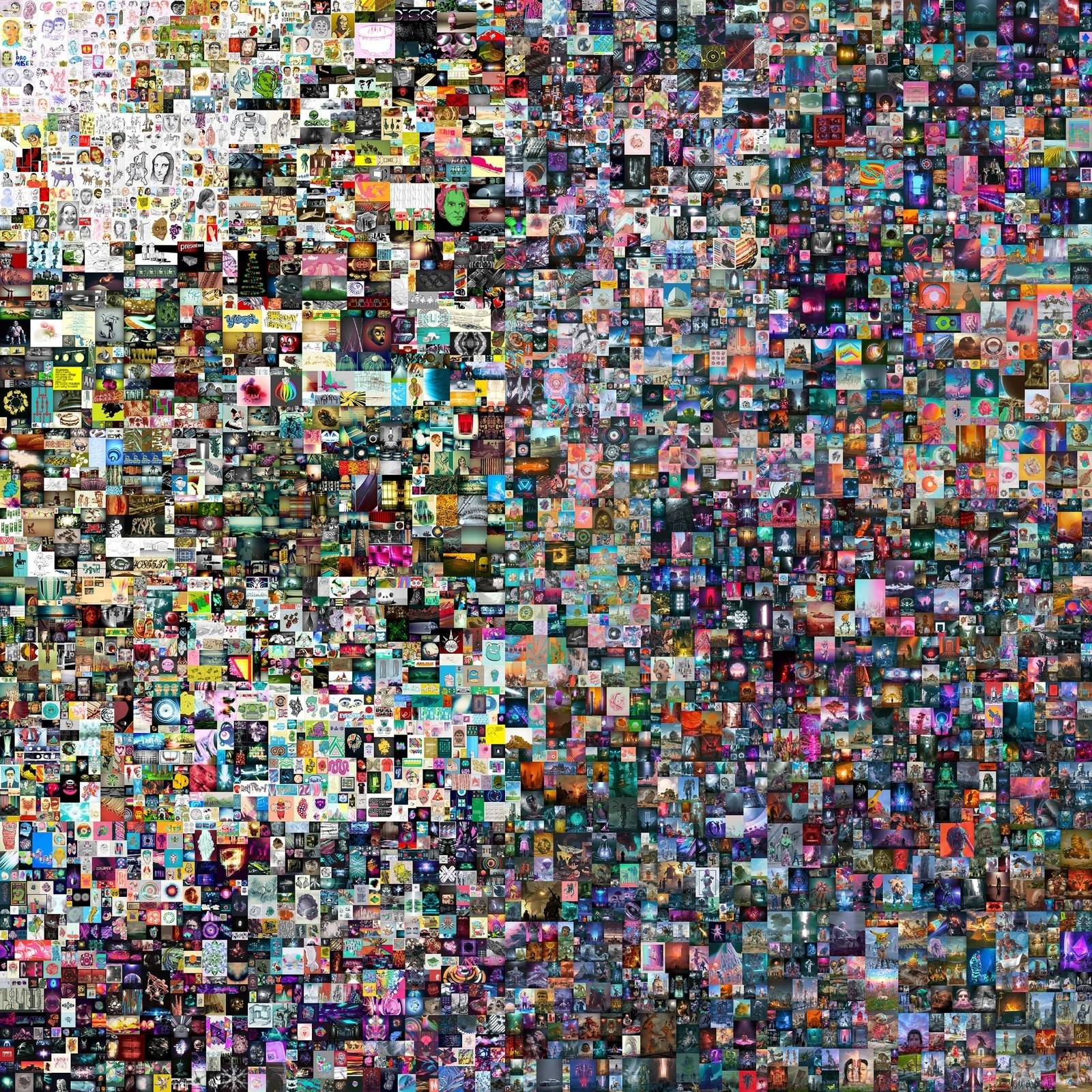
Beeple’s EVERYDAYS: THE FIRST 5000 DAYS, sold at Christie’s for $69,346,250 in March 2021.
This marked the first sale of a purely digital NFT artwork by a major international auction house and set an important record for digital art at the time.
For NFTs, the moment represented something like the opposite extreme of the early Bitcoin pizza story.
In 2010, people saw that digital currency could be used to buy something in the physical world.
In 2021, they saw that a purely digital work could enter the traditional art market and receive a price in the tens of millions of dollars.
NFTs began moving beyond the crypto community and into the worlds of art, entertainment, brands, and capital markets.
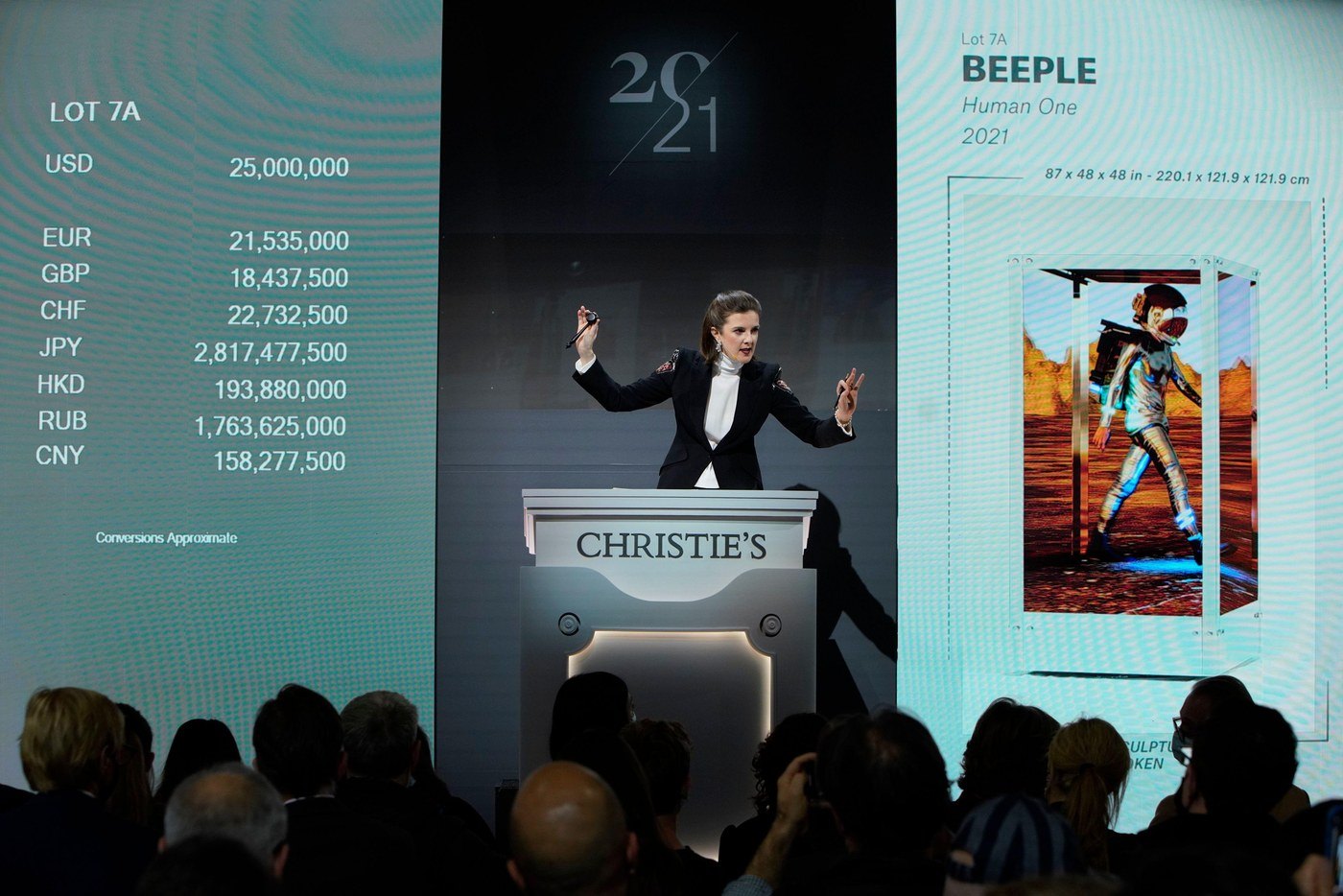
Christie’s auction of Beeple’s HUMAN ONE in 2021, illustrating the growing presence of digital art in the traditional auction market.
Where Does NFT Value Come From?
Many people encountering NFTs for the first time ask the same question:
“Isn’t it just a picture?”
This is one of the most common misunderstandings about NFTs.
An image is only one type of content that an NFT can represent. The more important question is what properties exist behind the NFT itself.
1. Scarcity
Digital files can be copied, but the issuance of a blockchain asset can be recorded clearly.
For example, 1/1 represents a unique edition, while 1/10,000 can represent one asset within a fixed collection of 10,000.
2. Verifiable Ownership
A blockchain can record which address currently holds an NFT as well as related on-chain transfer records.
For that reason, a user does not simply own a JPG file. More precisely, the user holds a digital asset with a blockchain-based ownership record.
3. Liquidity
An asset is more likely to develop a market price when buyers and sellers can find each other.
This is one reason NFT marketplaces became so important. As more buyers, sellers, and assets entered the market, a broader system began to develop:
4. Community and Identity
NFTs later developed another form of value: digital identity.
Some PFP NFTs are no longer viewed only as avatars. They can also represent membership in a digital community.
Holding a particular NFT may provide membership, community access, event benefits, gaming benefits, or brand experiences.
In this way, NFTs began to extend from:
“What do I own?”
to:
“Who am I, and which digital community do I belong to?”
NFTs Are No Longer Limited to Ethereum
Much of the early NFT boom took place on Ethereum. As the market developed, however, different blockchains began to build their own ecosystems.
- Ethereum: High-value collectibles, art, blue-chip assets, and mature on-chain infrastructure
- Solana: Higher transaction speeds and lower transaction costs, supporting more frequent NFT, collectible, and community trading
- TON: Closer connections between NFTs, social networks, digital identity, gaming, and the Telegram ecosystem
- Base and Polygon: Networks that continue to lower the barriers for ordinary users creating and using blockchain-based assets
NFTs began moving from “digital pictures on one blockchain” toward a multi-chain, multi-platform, and multi-use digital asset ecosystem.
Can Digital Art Become a High-Value Asset?
The answer began to change as the NFT market produced a number of high-profile sales.
The Merge — About $91.8 Million
Artist Pak’s The Merge generated total sales of approximately:
$91,806,519
The transaction structure was unusual. The work consisted of a large number of “mass” units purchased collectively by many collectors.
For that reason, there has been debate within the industry about whether The Merge should be described as a single NFT setting a $91.8 million sales record.
Regardless of that debate, it demonstrated that digitally native art could support market values reaching tens of millions of dollars and approaching $100 million.
Everydays: The First 5000 Days — About $69.3 Million
If the focus is placed on a complete, single NFT artwork, Beeple’s Everydays: The First 5000 Days, which sold for approximately $69.3 million, remains one of the most significant transactions in NFT history.
Its importance went beyond the price. More importantly, NFTs had crossed the boundary between the crypto market and the highest levels of the traditional art market.
CryptoPunk #5822 — About $23.7 Million
High-value transactions were not limited to digital art. Individual collectible NFTs such as CryptoPunks also reached prices in the tens of millions of dollars.
CryptoPunk #5822 sold for:
8,000 ETH
At the market price at the time, that was approximately:
$23.7 million
A project that began as an experiment with pixelated avatars had entered a market measured in tens of millions of dollars.
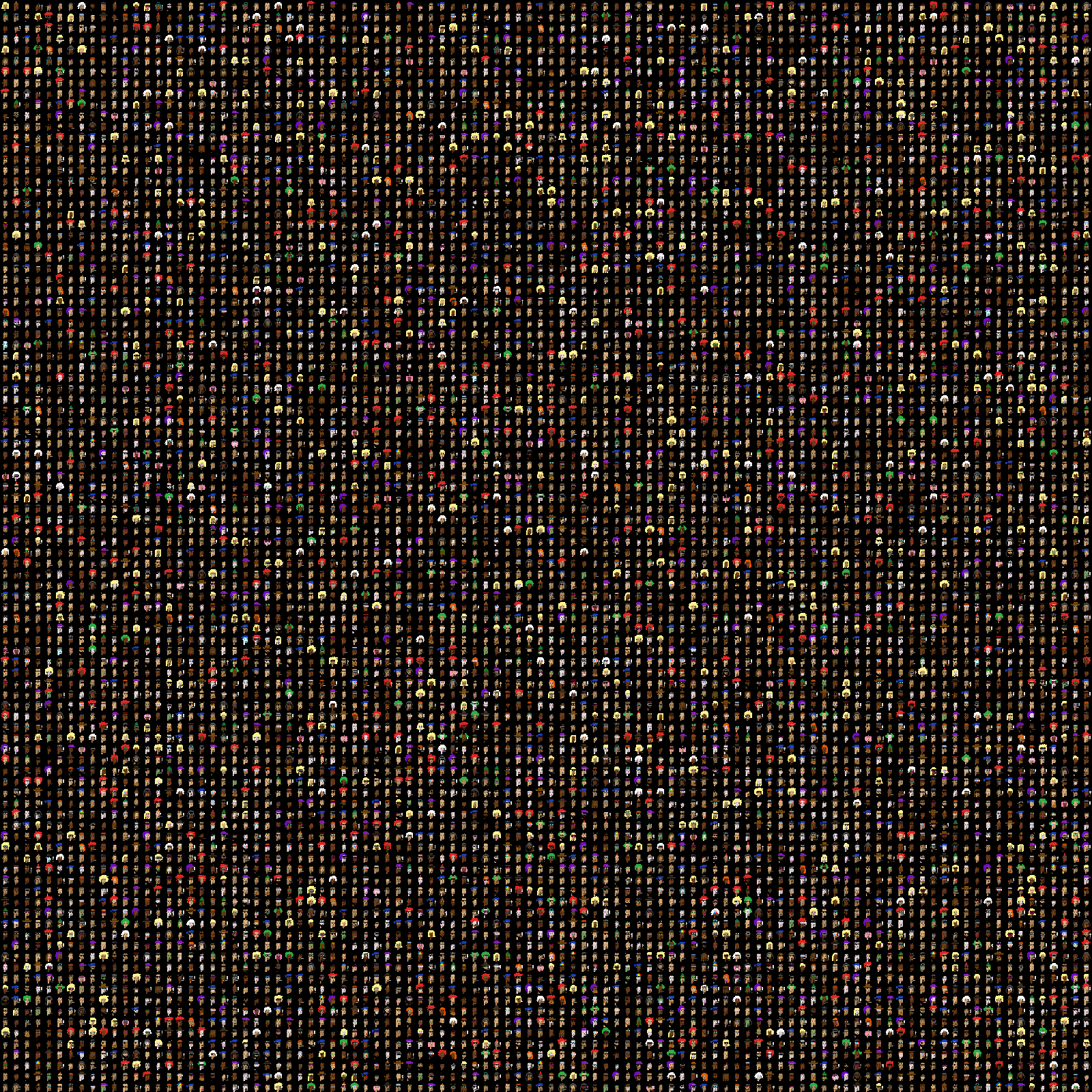
CryptoPunks, a collection of 10,000 algorithmically generated pixel characters launched in 2017.
Why Can a “Picture” Be Worth Millions of Dollars?
This is one of the most common questions asked about NFTs.
But if an NFT is understood only as a JPG file, it becomes difficult to understand the market surrounding it. The image is only one way an NFT can be displayed.
Factors that may contribute to NFT market value include:
Scarcity
NFTs can have clearly defined issuance limits. A 1/1 NFT represents a unique version, while a 10,000-item collection can contain assets with different numbers and attributes.
A digital file can be copied, but copying the image does not automatically create a second blockchain ownership record for the original asset.
Ownership
An NFT can use a blockchain to record which address currently holds the asset as well as related on-chain transfer history.
Users are therefore not trading only an image file, but a digital asset with an on-chain record.
Liquidity
An asset having a listed price does not mean it will necessarily sell at that price.
One of the key factors affecting whether a market can continue to develop is liquidity. The number of buyers and sellers, market depth, scarcity, and demand can all affect an NFT’s ability to trade.
This is also an important reason NFT marketplaces exist.
Community
Projects such as CryptoPunks, Bored Ape Yacht Club, and Pudgy Penguins further demonstrated that NFTs can also become forms of digital identity and community credentials.
Users may not be purchasing only an image. The asset may also be connected to:
The value logic surrounding NFTs therefore became increasingly complex.
The Market Did Not Develop in a Straight Line
No emerging market develops in a straight line, and NFTs were no exception.
The rapid growth of the NFT market in 2021 brought large amounts of capital, new users, and new projects. It also produced significant speculation.
Some NFT prices rose sharply over short periods of time, and large numbers of new projects entered the market.
Later, the market cooled, and both prices and trading activity declined substantially across many NFTs.
That shift led the industry to reconsider a more important question:
If an NFT has no lasting utility, why should it retain long-term value?
As a result, the next stage of NFT development began to move from:
“How much can this picture increase in price?”
toward:
“What can this digital asset actually do?”
This was an important change.
From “Pictures” to Digital Asset Infrastructure
Digital art is the easiest form of NFT for many people to understand, but it is not the endpoint of the technology.
From a technical perspective, the core function of an NFT is not to “generate an image.” It is to allow a unique object to have an identifiable, verifiable, and transferable record of digital ownership.
Viewed from that perspective, the potential applications become much broader.
Future NFT use cases may increasingly include:
- Digital identity: memberships, credentials, and community identity
- Gaming assets: characters, equipment, land, and in-game items
- Ticketing: concert, sports, and event tickets
- Membership benefits: brand memberships and exclusive services
- Intellectual property: creator works and licensing
- Digital collectibles: art, music, culture, and branded assets
- Real-world asset digitization: linking certain real-world rights or interests with on-chain credentials where permitted by applicable laws and regulations
This is one of the areas where the future development of NFTs may be most significant.
The Next Generation of NFTs May Not Emphasize the Term “NFT”
In the early days of the internet, people often emphasized that a company was “an internet company.” Today, that description is far less common because the internet has become part of the underlying infrastructure of everyday life.
NFTs may eventually follow a similar path.
Today, people speak about NFT tickets, NFT games, and NFT membership cards.
In the future, users may simply say:
- Tickets
- Equipment
- Membership cards
Whether the underlying technology is an NFT may no longer matter to the average user.
The blockchain would simply operate in the background, handling ownership records, verification, transfers, settlement, and recordkeeping.
If that happens, one of the greatest signs of NFT adoption may be that people no longer need to discuss NFTs at all.
From Two Pizzas to a New Era of Digital Ownership
There are two striking images in the history of digital assets.
One took place in 2010:
10,000 BTC → Two pizzas
The other emerged during the NFT era:
- A completely digital artwork sold for approximately $69.3 million
- A collectible CryptoPunk sold for approximately $23.7 million
- Under its unusual sales structure, The Merge generated approximately $91.8 million in total sales
On the surface, the most obvious change is the scale of the prices.
But the deeper change is how people think about digital value.
Bitcoin once led people to seriously consider whether money without a physical form could have value.
NFTs raised another question:
Can an asset without a physical form have ownership, scarcity, and market value?
More than a decade ago, it was difficult for many people to imagine that a string of digital code could be used to buy pizza.
Years later, it was equally difficult to imagine that a purely digital artwork could enter Christie’s and sell for tens of millions of dollars.
That is one of the most interesting characteristics of technological development: innovations that later change the world often appear unremarkable when they first emerge.
The first stage of NFTs centered on collecting.
The second stage centered on trading.
The future may increasingly center on identity, rights, assets, gaming, social interaction, and the broader digital economy.
From digital currency to digital ownership.
From owning BTC to owning assets in the digital world.
The story of NFTs may only be beginning.